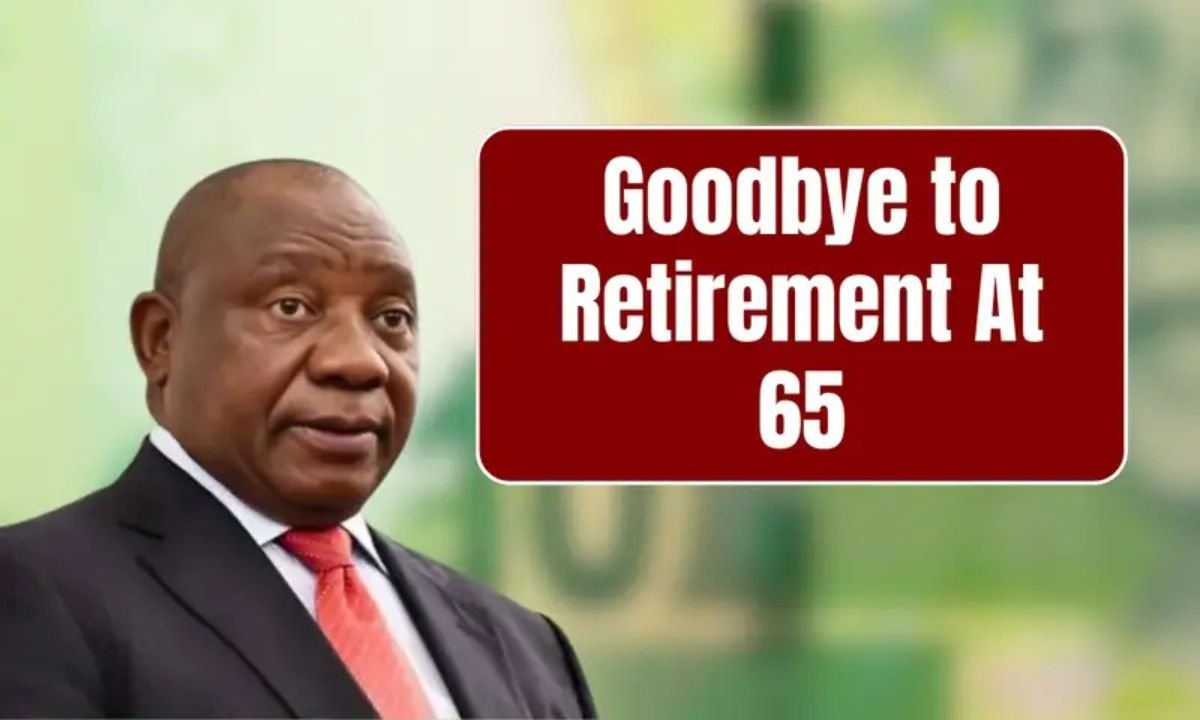
The South African government is considering retirement law modifications that may fundamentally change the retirement age and conditions of the citizens. One of the main concerns with the new regime is the possible substitution of the long-standing 65 years of age of retiring as a standard, which has stirred up a lot of concerns and discussions among current and future retirees.
Moving The Goalposts: Retirement Beyond 65
Most South Africans habitually thought that 65 was the retirement age. However, with longevity being the order of the day, economic factors, and the concerned approaches for the sustainability of pension systems, officials are starting to think that maybe the age is not viable anymore. Proposals in the draft suggest that those born in the years after specific cut-offs could be made to postpone their retirement to 65 or even be made to meet stricter criteria for receiving benefits.
The objective is not simply to cover the expenses related to the old pensions but also to reduce the number of people qualifying for social grants, especially as people live longer and require financial support for a more extended period.
Impact On Pension Funds & Social Grants
One of the major contributors to the reforms is the financial burden and pressure faced by public finances and pension systems. Pushing back the retirement age might result in a lesser debt liability for the insurance companies and movers of money thus delaying even longer than expected, large pension costs and payouts. On the other hand, social grants controlled by the government might see tightening of the retirement criteria rigorous enough to affect the granting of eligibility or even earlier reviews of such.
Critics, however, do warn that those adjustments may have a more negative impact on lower-income workers or those whose jobs are physically demanding. The proposal to push back the retirement for all workers could worsen the existing inequality between those who are old and have the fewest options for making a living in their old age.
Transitional Provisions & Grandfathering
In general, the changes to the existing regulations that are suggested through the new regulations, would soften the blow for example, the people who are close to retiring (like those born in a certain year or earlier) can still retire at 65. Others, on the contrary, will probably start to see an increase in their retirement age little by little, for instance, people born in 1960 or later could retire at 66 or 67 years old respectively. The transitional measures are meant to prepare the users for the new reality rather than to stampede them into action. Public consultations and gradual implementation are usually accompanying such significant social changes.
Public Debate & Legal Challenges
Similar to any changes that relate to social benefits, the alterations are very likely to attract discussions and legal examination. Proponents argue for the necessity of fiscal prudence and support adapting to longer life spans. On the other hand, opponents highlight the issue of fairness, worker exhaustion, and the problems caused by low-income retirees.
Also Read : SASSA Grant Increase November 2025: New Payment Amounts & Official Dates